

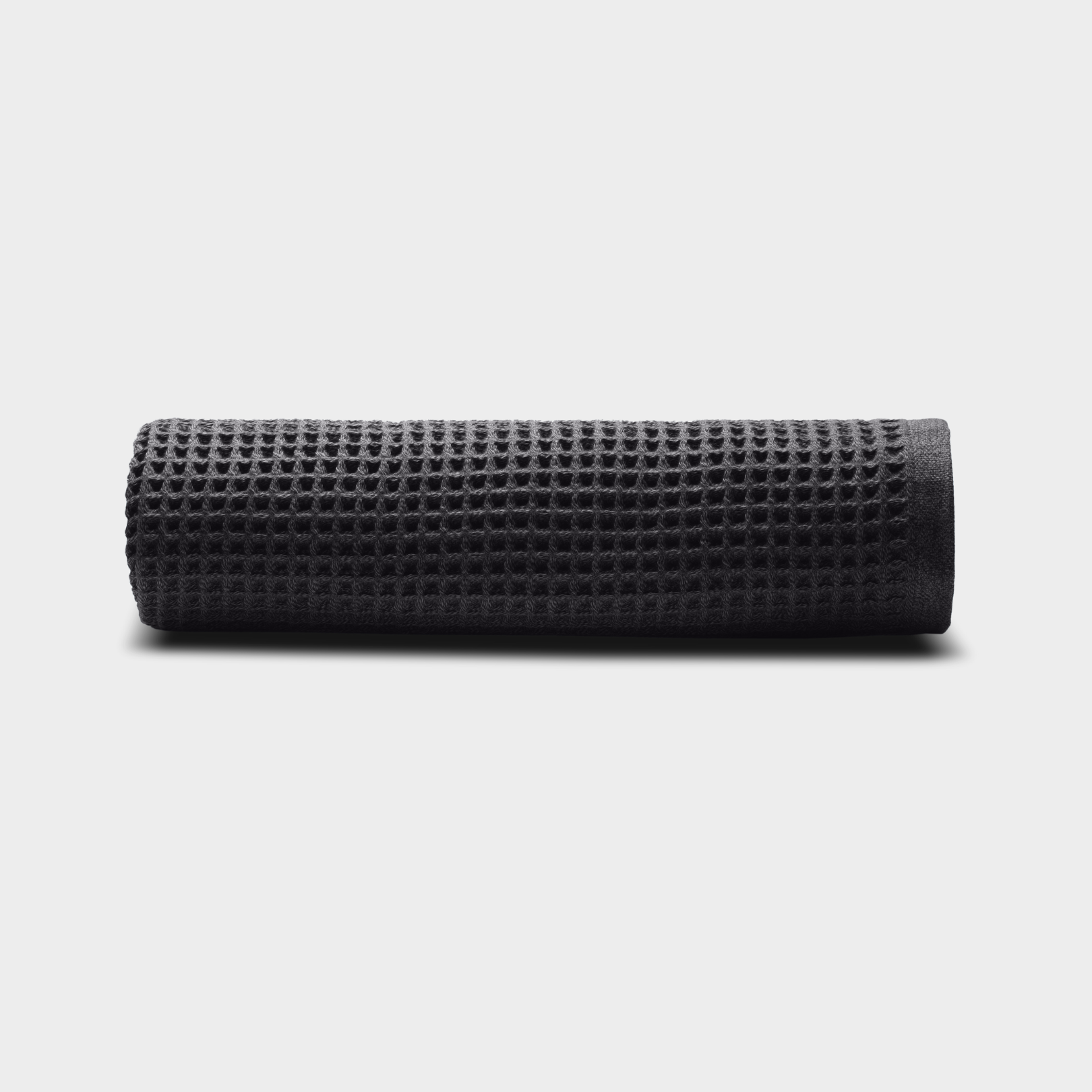


African Net Sponge vs. Natural Scrubber: Which Is Right for You?
If your algorithm has been serving you people stretching a three-foot neon mesh across their backs like they're flossing a giant tooth, congratulations. You've met the African net sponge.
It's having a moment. TikTok and Instagram are full of people swearing it changed their skin, their showers, and their lives. And honestly? While lot of that hype is earned, there's more you should know.
There's one detail most of those videos skip, and it's printed right on the label. So let's do this properly: what the net actually is, what it gets right, where it falls short, and how it compares to a natural shower scrubber.
What Is an African Net Sponge?
An African net sponge (also called an African exfoliating net or sapo sponge) is a long, stretchy mesh washcloth that came out of West Africa. It's been a household staple for generations. The modern version is usually 30 to 40 inches of nylon mesh, and it runs about $8 to $15.
You lather it up, grab both ends, and do the floss across your back like you're drying off with a towel.
African net sponge benefits:
There are good reasons people love them:
- It reaches your back. This is the big one. The length lets you scrub the spot every loofah has left you wanting more.
- It exfoliates hard. The mesh is grippy and textured, so dead skin doesn't stand a chance.
- It dries fast. Thin mesh doesn't hold water, which means less time sitting damp in your shower.
- It lasts. Sellers commonly quote one to five years with proper care.
- It's cheap. Hard to argue with 8 bucks.
So yes, it's a legitimately great tool. Generations of people and cultures didn't get it wrong.
The Catch: It's Nylon
Here's the part the videos skip. Flip over almost any African net sponge listing and the material line reads the same: 100% nylon.
Nylon is plastic. Useful plastic, durable plastic, but plastic. Which makes it a little funny when listings call it a "natural body exfoliator" two lines above the word nylon.
That matters for three reasons:
- It doesn't break down. When your net finally retires, it goes to a landfill and stays there for a very long time. We’re talking 200+ years.
- It sheds. Synthetic fabrics release microfibers when washed. And yes, you are supposed to wash it in the laundry.
- It's a lot of grit, every day. Even some sellers recommend using it just 1 to 2 times a week. If your skin is sensitive or dry, daily scratching with plastic mesh can be too much.
None of this makes the net bad. It just means the hype is about the shape, not the material. And that's where natural scrubbers come in.

The Natural Alternative: The Casamera Scrubber
If you love what the net does but would rather not scrub with plastic, The Scrubber is your answer. It's a plant-based exfoliating body scrubber built around one idea: rough where it counts, soft where you need it.
- Two sides, two jobs:
The honeycomb side is gentle enough for every day. Flip it to the exfoliating walnut-shell side when you need a real scrub. The net gives you one intensity; The Scrubber gives you a dial.
- An absolute lathering machine:
One drop of body wash turns into a full foam party. Your body wash lasts longer as a bonus.
- Infused, not dyed:
Pick charcoal, matcha, volcanic mud, peppermint, or walnut. The color comes from the infusion, not a dye. Can't choose? Get The Variety Pack.
- Compostable at home:
When it's done, it goes back to the dirt. No landfill, no microfibers.
- It tells you when it's time:
Every shower tool picks up bacteria in a warm, damp bathroom. That's why dermatologists recommend replacing natural loofahs every 3 to 4 weeks and plastic ones about every two months (source). A natural scrubber makes that easy: when it starts breaking down, it's done. A nylon net looks the same on day 300 as on day 3- it never tells you it's time to replace it.
- It arrives hard as a rock:
Run it under warm water and it softens into a plush sponge in seconds. Leave it to dry, and it turns back hard to prevent bacteria or mold from growing.
African Net Sponge vs. Natural Scrubbers
|
|
African Net Sponge |
Classic Loofah |
Casamera Scrubber |
|
Material |
Nylon mesh |
Dried gourd (plant) |
Root of the Konjac plant |
|
Exfoliation |
Harsh |
Medium |
Two sides: gentle honeycomb + walnut-shell exfoliating |
|
Lather |
Good |
Good |
Rich foamy lather from a drop of soap |
|
Back reach |
Excellent |
Poor |
Different sizes available. Use The Rear Scrubber for your back. |
|
Drying |
Fast |
Slow |
Fully dry in 24hrs |
|
Lifespan |
1 to 5 years |
Weeks to a few months |
A few months |
|
End of life |
Landfill |
Compost if non-processed |
Compostable at home |
|
Price |
About $8 to $15 |
About $5 to $10 |
$11.25 to $20 |
Summary: The net wins on reach, speed, and price. Natural scrubbers win on skin benefits (what you're actually rubbing on your skin), sensation, and where it ends up.
"But the net reaches my back"
Fair. That's why we made The Rear Scrubber. Same plant-based philosophy, built for the spot between your shoulder blades. Get the Scrubber Pack, which includes all three sizes, and you've covered everything the net does, minus the nylon.
So, Which One Should You Buy?
Get the African net sponge if back reach is your top priority, you want one tool for years, and you don't mind rubbing plastic on your skin.
Get a natural scrubber if you want a plastic-free shower, gentler daily exfoliation, and a better lather.
The net started the conversation. We just think your skin deserves the plant-based version. Shop The Face Scrubber, The Rear Scrubber, and The Variety Pack.
Shop the Scrubbers →
FAQ
What is an African net sponge made of? Most African net sponges are made of 100% nylon mesh. They're durable and quick-drying, but synthetic, so they don't biodegrade or tell you when its time to replace them.
What are the benefits of an African net sponge? Its length makes it easy to scrub your back, the mesh exfoliates well, it dries fast, and it can last years. It's also inexpensive.
Is an African net sponge natural? No. Despite being a traditional tool, modern versions are nylon. If you want a natural option, look for a plant-based scrubber or loofah.
Can you use an African net sponge every day? There’s no schedule that suits everyone. It depends on your skin and how intense the exfoliation is. Sensitive or dry skin may do better with a gentler daily scrubber.
What is the best natural alternative to an African net sponge? A plant-based scrubber with a gentle side and an exfoliating side, like the Casamera Scrubber.
How long does a natural shower scrubber last? Usually a few months. Squeeze it out and hang it to dry after each use to get the most life out of it.